With Chrysanthemums and Peonies

US$1,100.00

Designed by Yinqing Zhu.

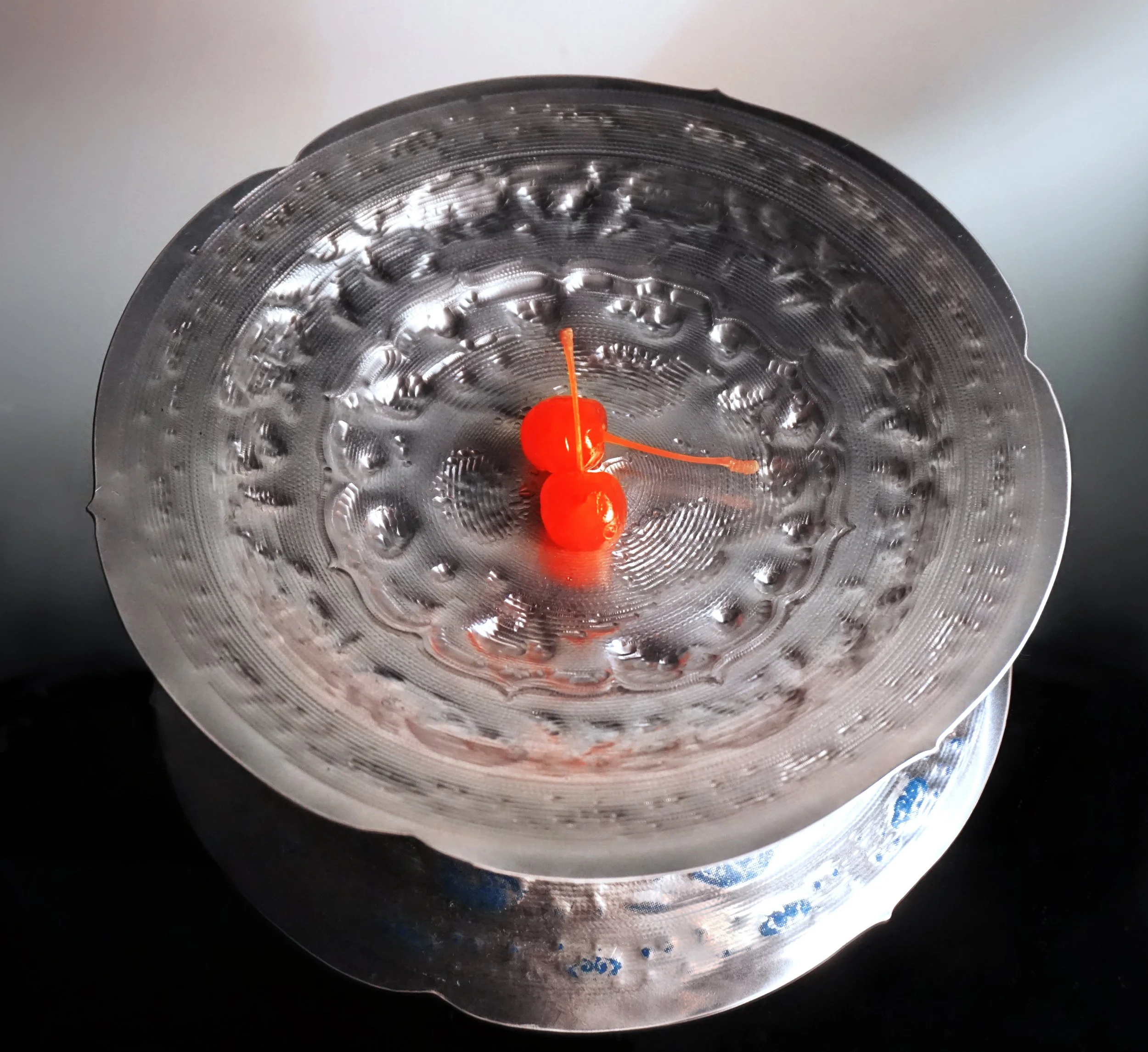
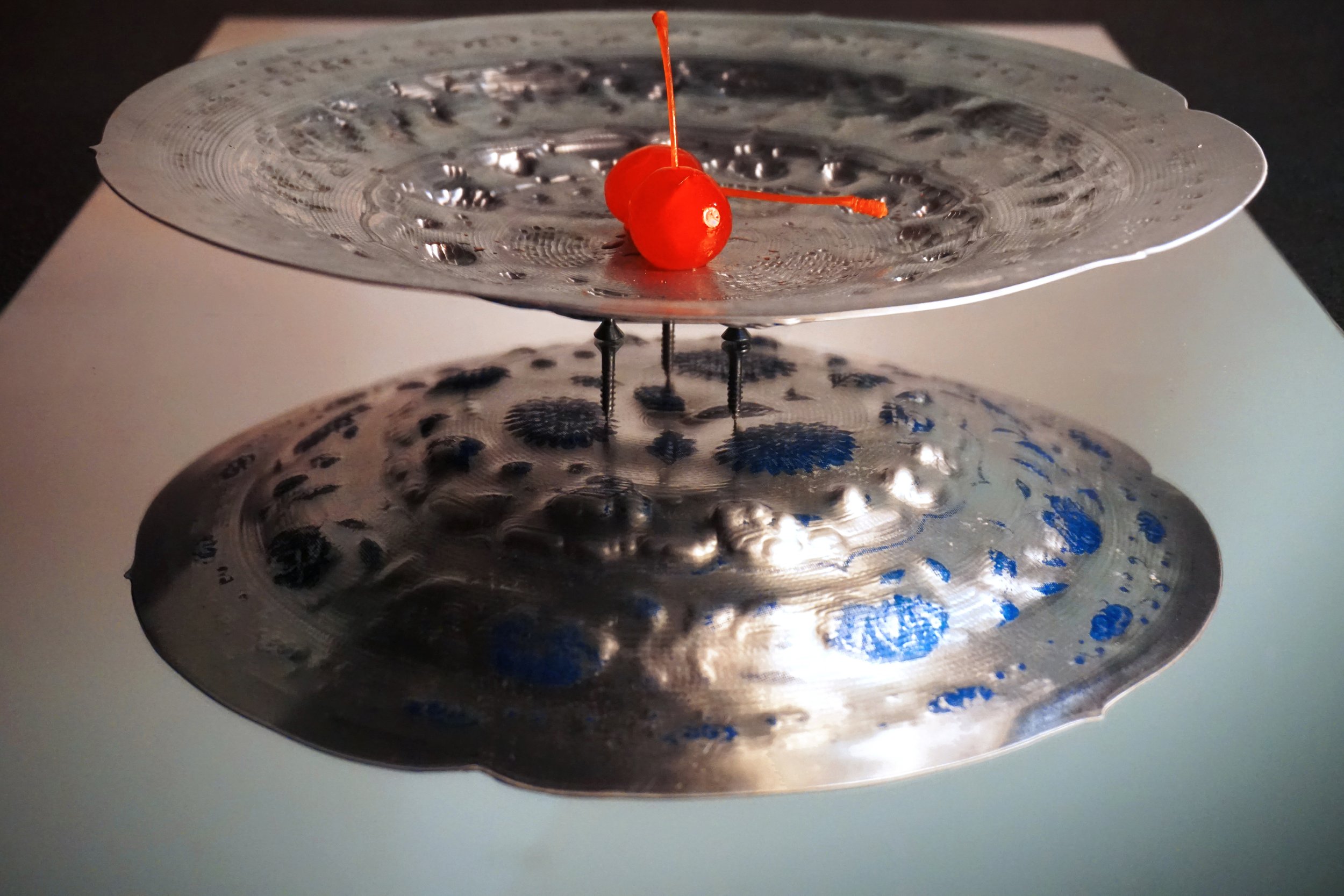
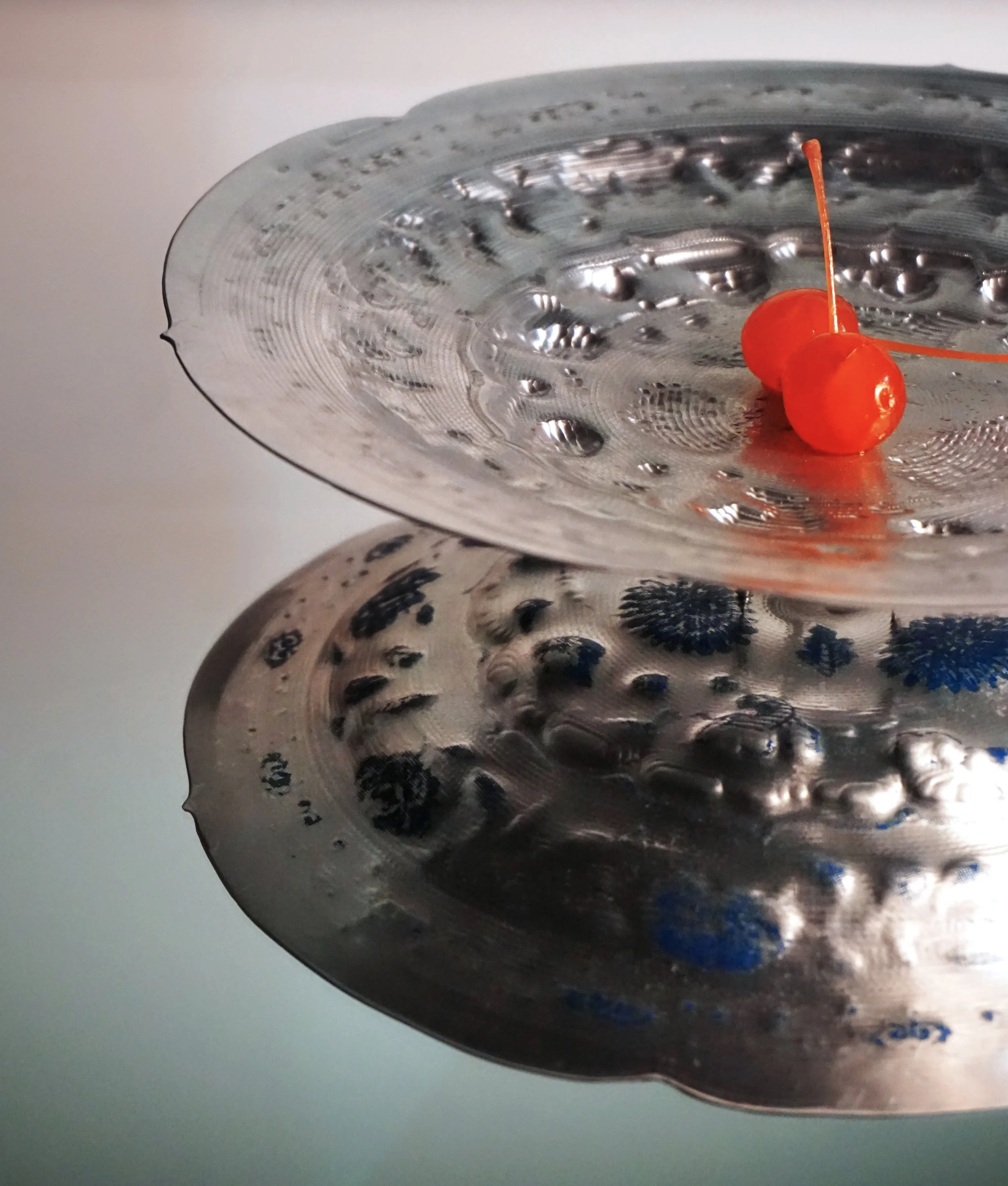
This work is a prototype within an ongoing exploration of surface, structure, and ornament. Long associated with domesticity, delicacy, and tranquility, the Chinese ceramic plate is here reinterpreted as an armature, formed through incremental pressure. In this digital repoussé, floral ornament—chrysanthemum and peony motifs—no longer operates as surface decoration, but as generative structure.

Detail & Care: Handle with care. Avoid bending or applying pressure. Clean with a soft, dry cloth; do not use abrasive materials.

— Size (L x W x H): 9 × 9 × 1.5”
— Weight: 0.125 lbs
— Materials: Aluminum

Designed by Yinqing Zhu.

This work is a prototype within an ongoing exploration of surface, structure, and ornament. Long associated with domesticity, delicacy, and tranquility, the Chinese ceramic plate is here reinterpreted as an armature, formed through incremental pressure. In this digital repoussé, floral ornament—chrysanthemum and peony motifs—no longer operates as surface decoration, but as generative structure.

Detail & Care: Handle with care. Avoid bending or applying pressure. Clean with a soft, dry cloth; do not use abrasive materials.

— Size (L x W x H): 9 × 9 × 1.5”
— Weight: 0.125 lbs
— Materials: Aluminum

How does your work evoke a sense of safety, comfort, belonging, or protection within the home?

Long associated with domesticity, care, and quiet stability, the Chinese ceramic object is here re-approached as both reference and reclamation—an act of returning to cultural roots through transformation.

In this shift of material, fragility is not lost but reconstituted: the delicacy of porcelain becomes a protective armature. Floral ornament—chrysanthemum and peony motifs—operates not as surface decoration but as generative structure. Through a digital reinterpretation of repoussé, pattern is displaced into depth, where embossing becomes a computational procedure and ornament becomes load-bearing. Within Safe & Sound, the work proposes safety as emerging from domesticity—where tranquility becomes active and shielding.
— Yinqing Zhu